Classic French Dip Sandwiches
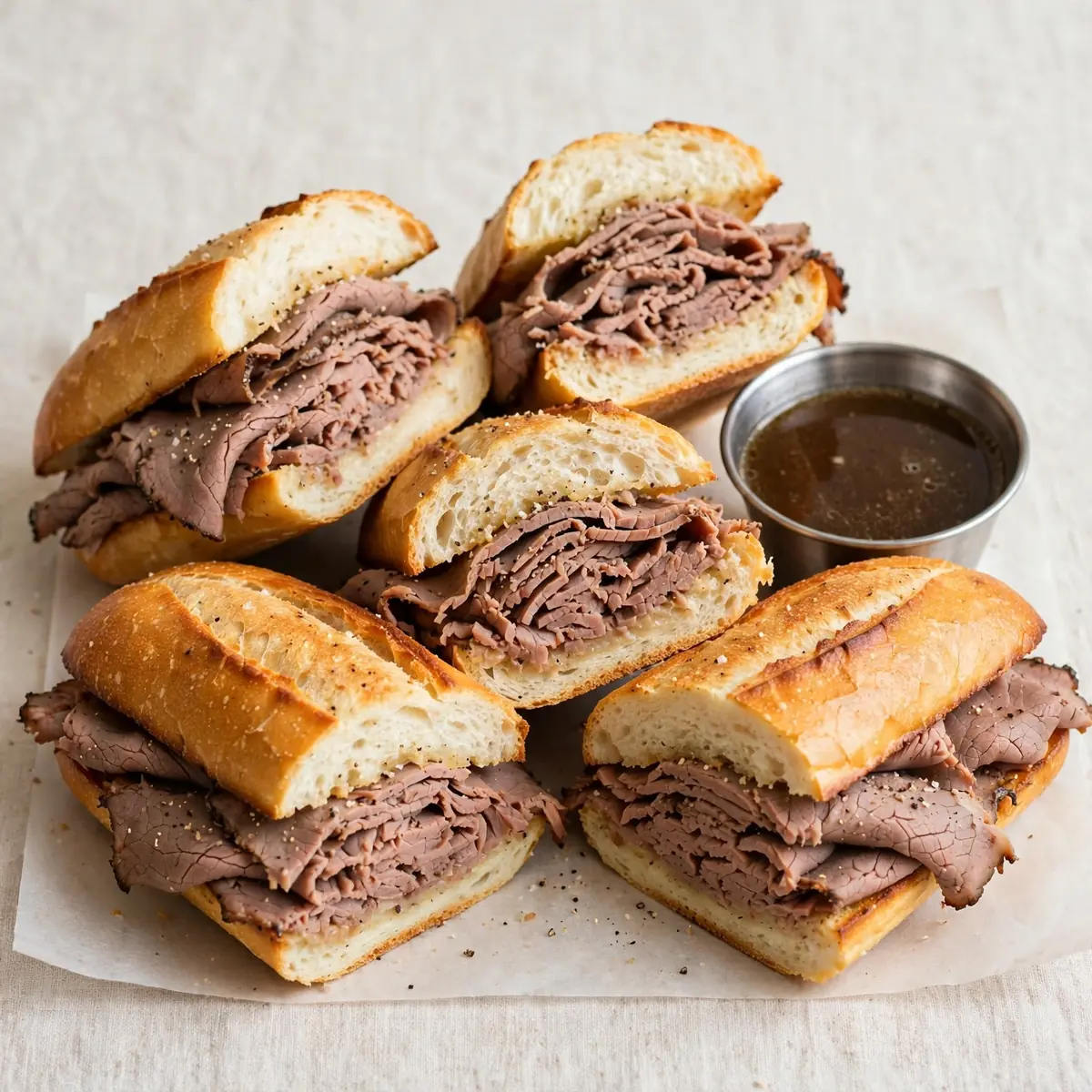
Come Saturday, when the rain taps at the window and the week’s rush finally dissolves, there’s one project I love to sink into: a deep, savoury, slow-cooked Classic French Dip Sandwich that fills the kitchen with the scent of roasting beef and caramelising onions.
Recipe Overview
- Prep Time: 20 minutes
- Cook Time: 3 hours 15 minutes
- Total Time: 3 hours 35 minutes
- Servings: 6 hearty sandwiches
- Difficulty: Medium
Why You’ll Love This Classic French Dip Sandwiches
- Deep, layered flavour: The long, slow braise transforms a simple cut of beef into something tender and rich, with an au jus that tastes like it’s been simmering all day — because it has.
- A truly sensory experience: From the sizzle of the sear to the fragrant steam when you slice the beef, every step invites you to slow down and savour the process.
- Cosy weekend ritual: This isn’t a midweek rush job. It’s the kind of cooking that pairs perfectly with a lazy afternoon, a good podcast, and the promise of a spectacular meal, much like a comforting batch of Southern Collard Greens or rich Classic Mac And Cheese (Southern Style).online/southern-collard-greens/”>Southern Collard Greens.
- Foolproof for gatherings: The recipe is forgiving and scales beautifully. I make this at least once a month for friends, and it never fails to draw everyone into the kitchen, asking what smells so good.
- Customisable to your pantry: You can swap the herbs, adjust the onion quantity, or use a different cut of beef without losing the soul of the dish.
Ingredients You’ll Need
- 1.5 kg beef topside or silverside, tied
- 3 tablespoons olive oil
- 3 large brown onions, thinly sliced
- 4 cloves garlic, smashed
- 2 tablespoons tomato purée
- 1 litre beef stock, hot
- 2 sprigs fresh rosemary
- 3 sprigs fresh thyme
- 2 bay leaves
- 1 teaspoon whole black peppercorns
- 1 tablespoon Worcestershire sauce (ensure halal-certified)
- 6 good-quality submarine rolls or crusty baguettes
- 200 g sliced provolone or Swiss cheese (optional)
- Salt and freshly ground black pepper, to taste
Tip: For the best au jus, use a stock with good gelatine content — homemade or a good-quality shop-bought brand. It gives the dipping liquid a silky body that clings to the bread beautifully.
How to Make Classic French Dip Sandwiches
- Prepare the beef and sear it deeply. Pat the beef dry with kitchen paper, then season generously all over with salt and pepper. Heat the olive oil in a large, heavy-based pot or Dutch oven over a high flame until it shimmers and you see the first wisp of smoke. Lower the beef in carefully — you should hear a fierce, satisfying sizzle. Sear for 4–5 minutes per side, until each face is a deep, mahogany brown. The crust should feel firm and smell intensely savoury. Remove the beef to a plate.
- Soften the onions and garlic. Reduce the heat to medium. Add the sliced onions to the pot; they will hiss and release a little moisture. Stir them, scraping up the browned bits from the bottom. Cook for 10–12 minutes, until they turn translucent and golden at the edges, and the kitchen fills with a sweet, mellow aroma. Add the smashed garlic and cook for one more minute, until fragrant.
- Build the braising liquid. Stir in the tomato purée and cook for 2 minutes, stirring constantly, until it darkens and smells richer. Pour in about 250 ml of the hot stock and scrape the pot bottom thoroughly to lift every last caramelised speck. Then add the remaining stock, the rosemary, thyme, bay leaves, peppercorns, and Worcestershire sauce. Bring to a gentle simmer — you should see small, lazy bubbles, not a rolling boil.
- Braise low and slow. Return the beef to the pot, along with any juices from the plate. The liquid should come about halfway up the meat. Cover with a lid and place in the oven at 160°C (fan-assisted). Let it cook for 2 hours 30 minutes to 3 hours. At the 2-hour mark, check the texture: a fork should slide into the beef with moderate resistance. The liquid should be deeply fragrant, with a colour like dark caramel.
- Rest the beef. Remove the pot from the oven and lift the beef onto a cutting board. Tent it loosely with foil and let it rest for at least 20 minutes. During this time, the fibres relax and reabsorb their juices, ensuring every slice stays succulent. Do not skip this step — it makes the difference between moist slices and dry ones.
- Strain and season the au jus. While the beef rests, strain the braising liquid through a fine-mesh sieve into a clean saucepan, pressing on the onions and herbs to extract all the flavour. Discard the solids. Skim off any excess fat from the surface. Taste the jus and adjust salt and pepper — it should be intensely beefy and savoury. Keep it warm over a low flame.
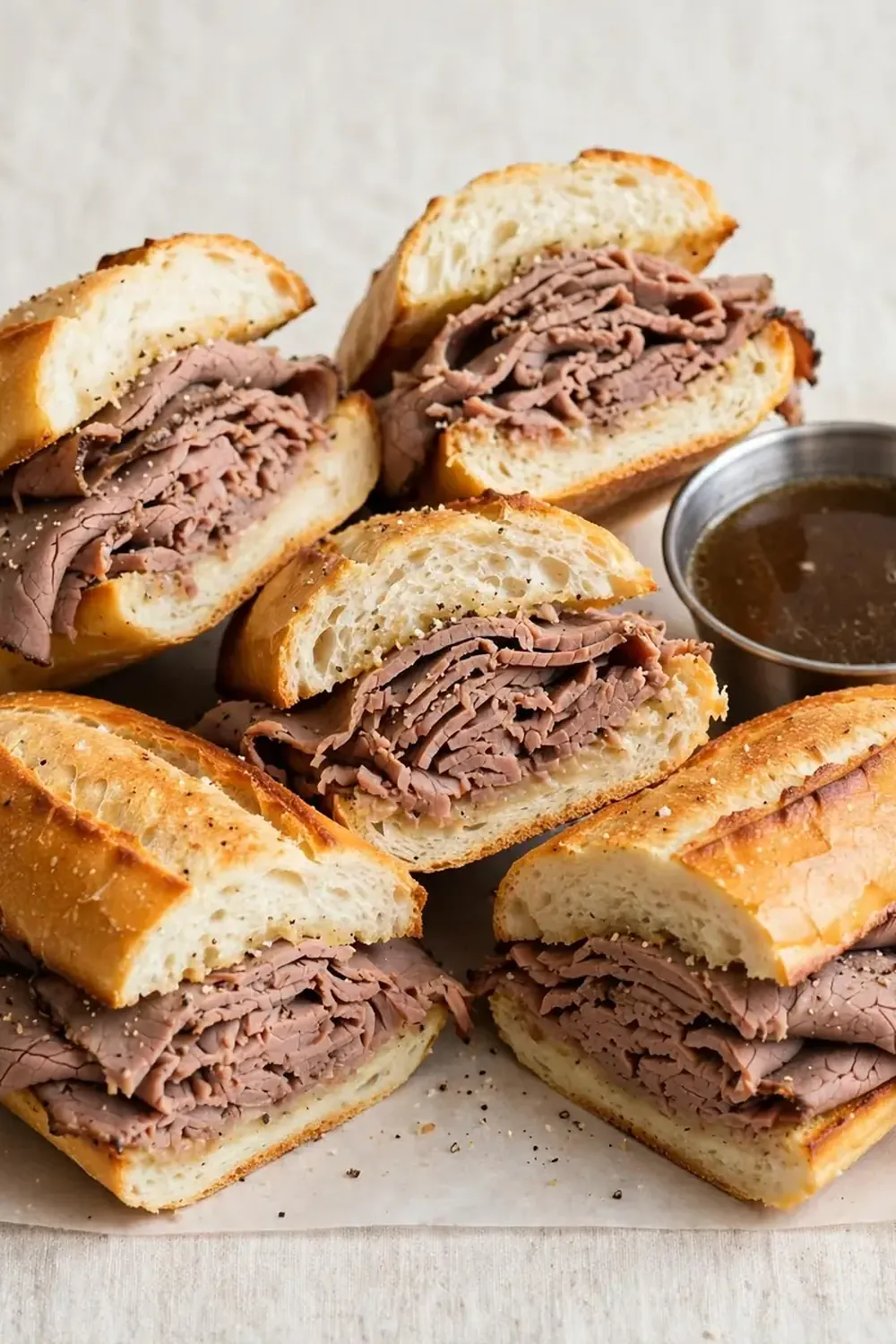
- Slice, assemble, and serve. Slice the beef thinly against the grain — aim for slices about 5 mm thick. They should glisten and hold together. Split the rolls and lightly toast them. Pile the beef onto the bottom halves, add a slice of cheese if using, and spoon a little warm jus over the top to soften the bread. Place the top halves on, and serve immediately with small bowls of the remaining au jus for dipping.
Tips From My Kitchen
- Choose the right cut: Topside, silverside, or even a thick piece of brisket works wonderfully. Avoid very lean cuts like fillet — they lack the connective tissue that breaks down into gelatin during the long braise, which is what gives the meat its tender, shreddable quality and enriches the jus.
- Sear with patience: The crust isn’t just for colour — it’s pure flavour. After testing this recipe five times, I finally got it just right by ensuring the pan was properly hot and I didn’t move the beef for the full 4–5 minutes per side. A good crust means a deeper, more complex au jus.
- Don’t rush the onions: Those 10–12 minutes of cooking the onions are not wasted. They develop sweetness and body that balances the rich beef. If they start to catch, add a splash of water and scrape the pan — that fond is gold.
- Let the beef cool in the liquid (optional): If you have time, after the initial braise, let the beef cool completely in the covered pot. Then reheat it gently before serving. This extra step allows the flavours to meld even more deeply, and the meat becomes exceptionally tender.
- Toast the rolls lightly: A good French dip sandwich needs bread that can hold up to dipping without disintegrating. Toasting the cut sides of the rolls under the grill for a minute creates a barrier that helps the bread stay sturdy, while the inside stays soft enough to absorb the jus.
- Double the jus if you love dipping: I always make extra. The jus freezes beautifully, and having a batch ready means you can make these sandwiches in half the time next weekend. Simply double the stock and seasonings, and reduce slightly at the end.
Common Mistakes to Avoid
- Overcrowding the pan: If you try to sear the beef in a pan that’s too small, the meat will steam instead of brown, and you’ll lose that deep, caramelised crust. Use a pot wide enough that the beef has at least 2 cm of space around it. If in doubt, sear in two batches.
- Wrong temperature: Braising at too high a temperature will toughen the meat and cause the liquid to reduce too quickly, leaving you with a dry, stringy result. Keep the oven at a gentle 160°C (fan-assisted) and check that the liquid is just barely simmering, not boiling.
- Skipping the rest time: Cutting into the beef straight out of the pot will flood your board with juices, leaving the slices dry. That 20-minute rest under foil is non-negotiable — it allows the meat to reabsorb its moisture and makes slicing much cleaner.
What to Serve With Classic French Dip Sandwiches
- A simple side salad with a sharp vinaigrette to cut through the richness.
- Hand-cut chips or roasted new potatoes tossed in rosemary and salt.
- Pickled cucumbers or a small bowl of cornichons for a tangy contrast.
- A pot of strong, dark tea or a chilled glass of sparkling water with lemon.
Frequently Asked Questions
Classic French Dip Sandwiches
Ingredients
Method
-
Prepare the beef and sear it deeply. Pat the beef dry with kitchen paper, then season generously all over with salt and pepper. Heat the olive oil in a large, heavy-based pot or Dutch oven over a high flame until it shimmers and you see the first wisp of smoke. Lower the beef in carefully — you should hear a fierce, satisfying sizzle. Sear for 4–5 minutes per side, until each face is a deep, mahogany brown. The crust should feel firm and smell intensely savoury. Remove the beef to a plate.
-
Soften the onions and garlic. Reduce the heat to medium. Add the sliced onions to the pot; they will hiss and release a little moisture. Stir them, scraping up the browned bits from the bottom. Cook for 10–12 minutes, until they turn translucent and golden at the edges, and the kitchen fills with a sweet, mellow aroma. Add the smashed garlic and cook for one more minute, until fragrant.
-
Build the braising liquid. Stir in the tomato purée and cook for 2 minutes, stirring constantly, until it darkens and smells richer. Pour in about 250 ml of the hot stock and scrape the pot bottom thoroughly to lift every last caramelised speck. Then add the remaining stock, the rosemary, thyme, bay leaves, peppercorns, and Worcestershire sauce. Bring to a gentle simmer — you should see small, lazy bubbles, not a rolling boil.
-
Braise low and slow. Return the beef to the pot, along with any juices from the plate. The liquid should come about halfway up the meat. Cover with a lid and place in the oven at 160°C (fan-assisted). Let it cook for 2 hours 30 minutes to 3 hours. At the 2-hour mark, check the texture: a fork should slide into the beef with moderate resistance. The liquid should be deeply fragrant, with a colour like dark caramel.
-
Rest the beef. Remove the pot from the oven and lift the beef onto a cutting board. Tent it loosely with foil and let it rest for at least 20 minutes. During this time, the fibres relax and reabsorb their juices, ensuring every slice stays succulent. Do not skip this step — it makes the difference between moist slices and dry ones.
-
Strain and season the au jus. While the beef rests, strain the braising liquid through a fine-mesh sieve into a clean saucepan, pressing on the onions and herbs to extract all the flavour. Discard the solids. Skim off any excess fat from the surface. Taste the jus and adjust salt and pepper — it should be intensely beefy and savoury. Keep it warm over a low flame.
-
Slice, assemble, and serve. Slice the beef thinly against the grain — aim for slices about 5 mm thick. They should glisten and hold together. Split the rolls and lightly toast them. Pile the beef onto the bottom halves, add a slice of cheese if using, and spoon a little warm jus over the top to soften the bread. Place the top halves on, and serve immediately with small bowls of the remaining au jus for dipping.
Notes
I’d love to hear how your kitchen smells when you make these — the rich, beefy aroma that lingers long after the last bite. Share your own tips, tweaks, or questions in the comments below. And if you’re looking for more slow-cooked weekend projects, browse through our All Recipes collection for inspiration. Happy cooking, and enjoy every dip.