Ingredients
Method
- Make the dough: In a large bowl, whisk together the flour and salt. Add the cold butter cubes and rub them into the flour using your fingertips until the mixture resembles coarse breadcrumbs with some pea-sized butter pieces still visible. In a small jug, whisk the egg, cold water, and vinegar together. Pour this into the flour mixture and bring it together with a fork until a shaggy dough forms. Tip it onto a lightly floured surface and knead gently just until it comes together — you should see small flecks of butter in the dough, which will create steam pockets and flakiness. Flatten into a disc, wrap in cling film, and rest in the fridge for at least 30 minutes. The dough will feel firm and cool to the touch when it’s ready.
- Start the filling: While the dough rests, heat the olive oil in a large frying pan over a medium heat. Add the diced onion and red pepper, and cook for 6–7 minutes until they are soft and translucent, and the kitchen fills with a sweet, gentle aroma. Stir in the minced garlic and cook for another minute until it becomes fragrant.
- Brown the beef: Add the beef mince to the pan, breaking it up with a wooden spoon. Let it cook undisturbed for a few minutes until the underside is deeply browned — you’ll hear a satisfying sizzle. Then stir and continue cooking until all the meat is browned and no pink remains. The smell will shift from raw to deeply savoury.
- Add the spices and simmer: Sprinkle over the cumin, smoked paprika, oregano, black pepper, and salt. Stir well and cook for one minute until the spices bloom and become intensely aromatic. Stir in the tomato purée and cook for another minute, watching as it darkens slightly. Pour in the beef stock, bring to a gentle simmer, and let it cook for 5–7 minutes until most of the liquid has evaporated and the filling looks thick and glossy. You should be able to draw a line through the mixture with your spoon and see the bottom of the pan for a moment. Remove from the heat, stir in the parsley and chopped hard-boiled eggs if using, then spread the filling on a plate to cool completely. This step is crucial — hot filling will melt the butter in your dough and make it difficult to seal.
- Preheat and prepare: Preheat your oven to 200°C (180°C fan) and line two baking trays with baking paper. Take the rested dough from the fridge — it should feel firm but pliable.
- Roll and cut: On a lightly floured surface, roll the dough out to about 3mm thickness. Use a 15cm round cutter or a small plate as a guide to cut out circles. Gather the scraps, re-roll, and cut again. You should get 12 circles.
- Fill and seal: Place a generous tablespoon of the cooled filling in the centre of each dough circle, leaving a clean border around the edge. Brush a little water around the edge of the dough, then fold it over to create a half-moon shape. Press the edges firmly together, then crimp with a fork or twist into a rope edge. Place the empanadas on the prepared baking trays, leaving a little space between each for air to circulate.
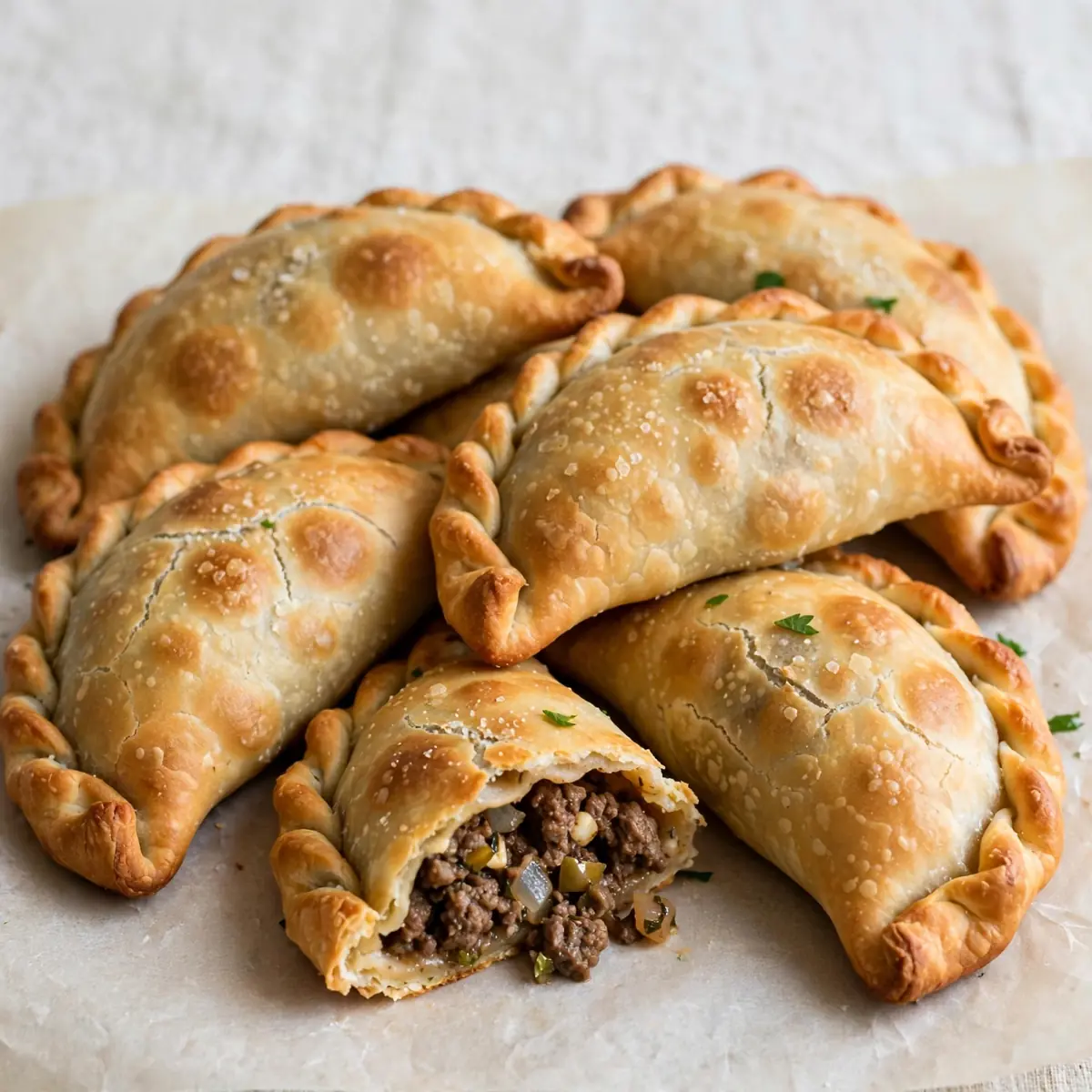
- Bake to golden: Brush each empanada with the beaten egg wash, ensuring you cover the crimped edges too for an even shine. Bake for 22–28 minutes, rotating the trays halfway through, until the pastry is a deep golden brown and the kitchen smells of toasted butter and spice. They will feel firm and look glossy when done. Let them cool on the tray for 5 minutes before serving — the filling will be molten hot.
Notes
Chilling the dough is essential for flakiness. Ensure filling is completely cool before assembling to prevent butter in dough from melting. Hard-boiled eggs are optional but traditional.