Ingredients
Method
- Place the eggs in a single layer in a saucepan and cover them with cold water by about 2.5 centimetres. Set the pan over a high heat and listen for the water to begin its first, tentative bubbles. As soon as you hear a gentle, rolling boil, cover the pan with a lid, turn off the heat entirely, and set a timer for exactly 10 minutes. The water will still be hot enough to cook the yolks through to a tender, fully set state.
- While the eggs cook, prepare an ice bath by filling a large bowl with cold water and a generous handful of ice cubes. When the timer sounds, immediately drain the hot water from the saucepan and carefully transfer the eggs into the ice bath using a slotted spoon. The shock of the cold water will halt the cooking process and keep those yolks a beautiful, sunny yellow rather than a greyish green.
- Let the eggs rest in the ice bath for at least 10 minutes, until they are completely cool to the touch. You will feel the shells become slightly brittle. To peel, gently tap each egg all over on the countertop, creating a fine web of cracks, then roll it between your palms to loosen the membrane. Starting from the wider, air-pocket end, peel the shell away under a thin stream of running water—the water helps slide the shell off cleanly.
- Using a sharp knife, slice each peeled egg in half lengthways. You will see the yolk, a perfect dome of deep gold, sitting in its white cradle. Gently pop the yolks out into a medium mixing bowl, arranging the hollowed egg white halves on a serving platter as you go.
- Mash the yolks with a fork until they resemble fine, dry crumbs. There should be no large lumps remaining. Add the mayonnaise, Dijon mustard, white wine vinegar, salt, pepper, and the optional pinch of cayenne. Stir the mixture vigorously with the fork until it transforms into a smooth, thick, and glossy paste. Taste a tiny bit—the flavours should be bright and savoury, with the vinegar cutting through the richness.
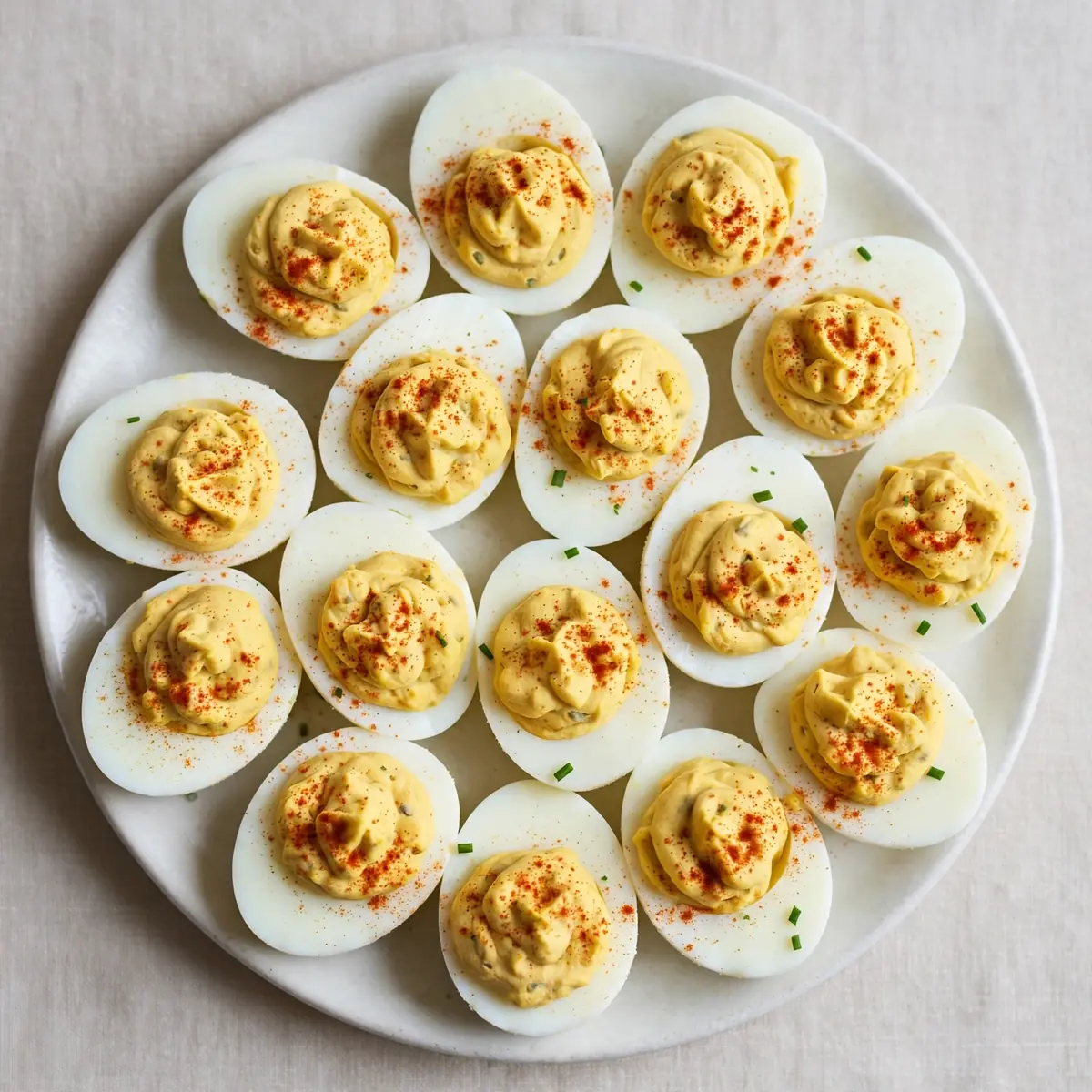
- For the most elegant finish, spoon the yolk mixture into a piping bag fitted with a large star nozzle. If you do not have a piping bag, a sturdy zip-top bag with a tiny corner snipped off works beautifully. Pipe the filling into the centre of each egg white half, creating a generous, swirling rosette that rises above the rim. You should hear a soft, satisfying squelch as the filling settles into place.
- Finally, dust the tops of the filled eggs lightly with paprika, using a fine-mesh sieve for an even, delicate coating. Scatter the snipped chives over the top. The bright green against the red-speckled yellow is a small, beautiful detail. Cover the platter loosely with cling film and refrigerate for at least 30 minutes before serving to let the flavours settle and meld together.
Notes
For easiest peeling, use eggs that are a few days old. The ice bath is crucial for stopping the cooking process and preventing grey yolks. Chilling before serving allows the flavors to meld.