Ingredients
Method
- Whisk the dry ingredients: In a large mixing bowl, combine the flour, caster sugar, baking powder and salt. Whisk them together thoroughly — you want the baking powder evenly distributed so every strand of cake puffs up uniformly.
- Build the batter: In a separate jug, whisk the eggs, milk and vanilla extract until they’re completely combined and slightly frothy on top. Pour this wet mixture into the dry ingredients, stirring gently with a wooden spoon until just combined. A few small lumps are fine — overmixing will make the cake tough. The finished batter should have the consistency of thick double cream, smooth and glossy.
- Heat the oil with care: Pour the oil into a deep, heavy-based saucepan or a wide, high-sided frying pan. The oil should be about 5cm deep. Heat it over a medium flame until a small drop of batter sizzles immediately on contact. If you have a thermometer, aim for 175°C. The oil should shimmer gently, not smoke — that’s your visual cue it’s ready.
- Prepare your pouring vessel: Pour the batter into a clean squeezy bottle with a narrow nozzle, a piping bag fitted with a 1cm round tip, or a small jug with a spout. A funnel with a 1cm opening is the traditional choice, hence the name, but any tool that gives you a steady, controlled stream will work.
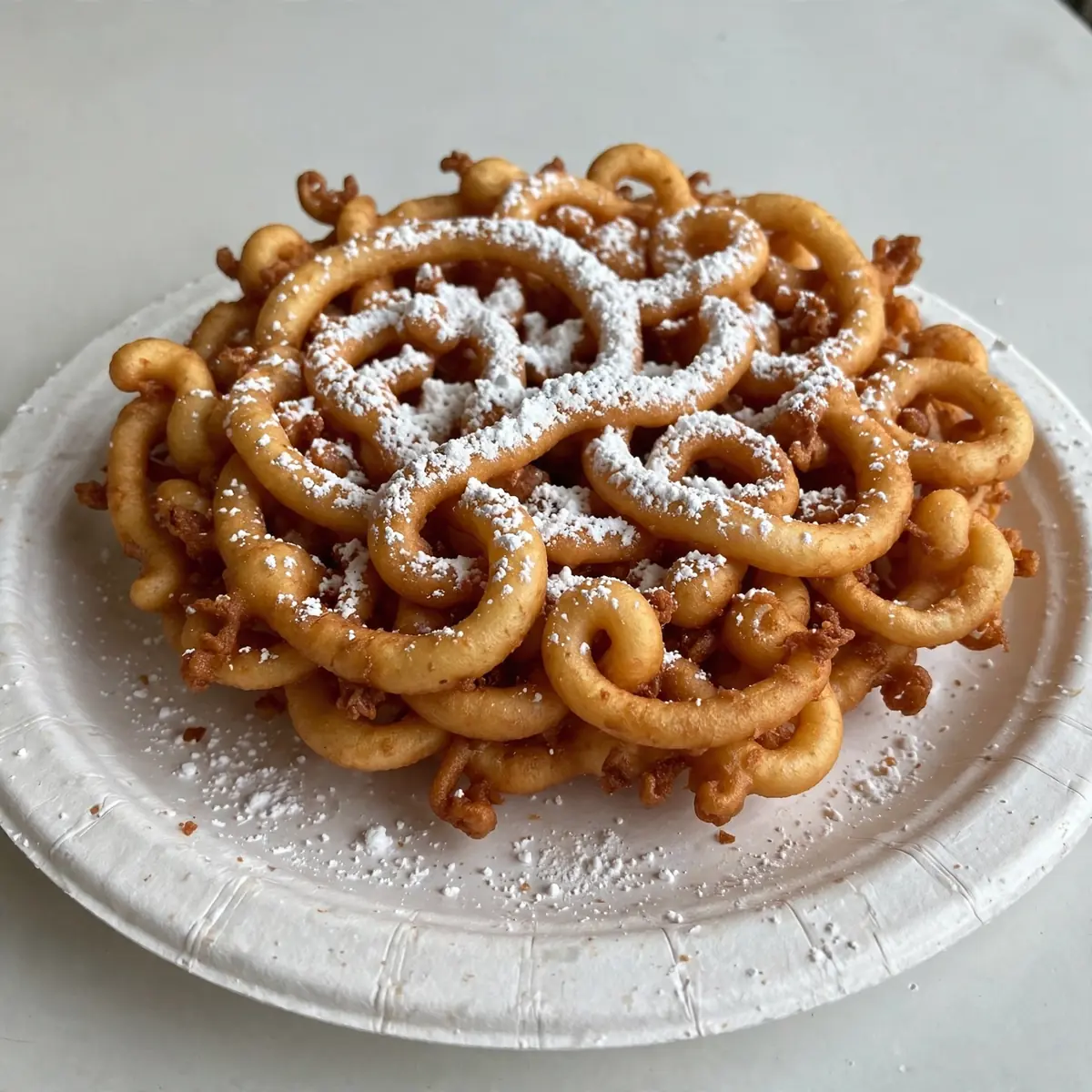
- Fry in a spiral pattern: Holding your pouring vessel about 15cm above the hot oil, begin drizzling the batter in a continuous, circular motion, starting from the centre and working outward. You want a freeform, lacy nest — about 18cm in diameter. The batter will sink slightly, then immediately begin to puff and turn golden. Let it cook for 1–2 minutes, until the underside is a deep, even gold. You’ll hear a satisfying, steady sizzle — that’s the sound of perfection.
- Flip with confidence: Using two forks or a slotted spatula, carefully flip the cake over. It should release easily from the oil. Cook for another 45 seconds to 1 minute, until the second side is equally golden and crisp. The cake will feel firm and slightly springy to the touch.
- Drain and dust: Lift the funnel cake from the oil, letting any excess drip back into the pan. Transfer it to a plate lined with kitchen paper to drain for just 15 seconds. Immediately transfer to a serving plate and, while it’s still warm, dust it heavily with icing sugar through a fine sieve. The heat will make the sugar melt slightly, creating a delicate, sweet glaze.
Notes
The batter should be thick but pourable. Use a deep, heavy-based pan to maintain oil temperature. For best results, fry immediately after mixing.