Ingredients
Method
- Sweat the vegetables: Warm the olive oil in a large, heavy-bottomed pot over a medium heat. Add the onion, carrot, and celery. Cook for 8–10 minutes, stirring occasionally, until the vegetables have softened and turned translucent. You should see the edges beginning to turn a pale gold, and the kitchen will smell sweet and earthy.
- Brown the meat: Turn the heat up to medium-high. Add both minces to the pot, breaking them up with a wooden spoon. Let the meat sit undisturbed for 3–4 minutes to develop a deep, caramelised crust. The sizzling sound will be vigorous at first, then quieten as moisture evaporates. Stir and continue cooking until no pink remains and the meat is a rich, nutty brown.
- Bloom the paste and garlic: Push the meat to one side of the pot. Add the tomato purée and minced garlic to the empty space. Stir them together for 1 minute until the paste darkens to a rusty red and smells intensely savoury. This step unlocks the purée’s full flavour.
- Build the sauce: Pour in the tinned tomatoes and beef stock, scraping the bottom of the pot with your spoon to lift up any browned bits. Add the dried oregano and bay leaf. Season with a generous pinch of salt and a few grinds of black pepper. Bring the sauce to a gentle bubble — you’ll see small, lazy bubbles breaking the surface.
- Simmer low and slow: Reduce the heat to low so the sauce barely murmurs. Partially cover the pot and let it cook for 1 hour to 1 hour 15 minutes. Stir every 15 minutes or so. The sauce will thicken and deepen in colour, turning a dark, glossy mahogany. When it’s ready, the sauce will coat the back of a spoon and release a heady, concentrated aroma.
- Cook the spaghetti: About 10 minutes before the sauce is finished, bring a large pot of generously salted water to a rolling boil. Add the spaghetti and cook until al dente according to package instructions. The pasta should be firm to the bite, with a tiny white speck in the centre when you cut a strand.
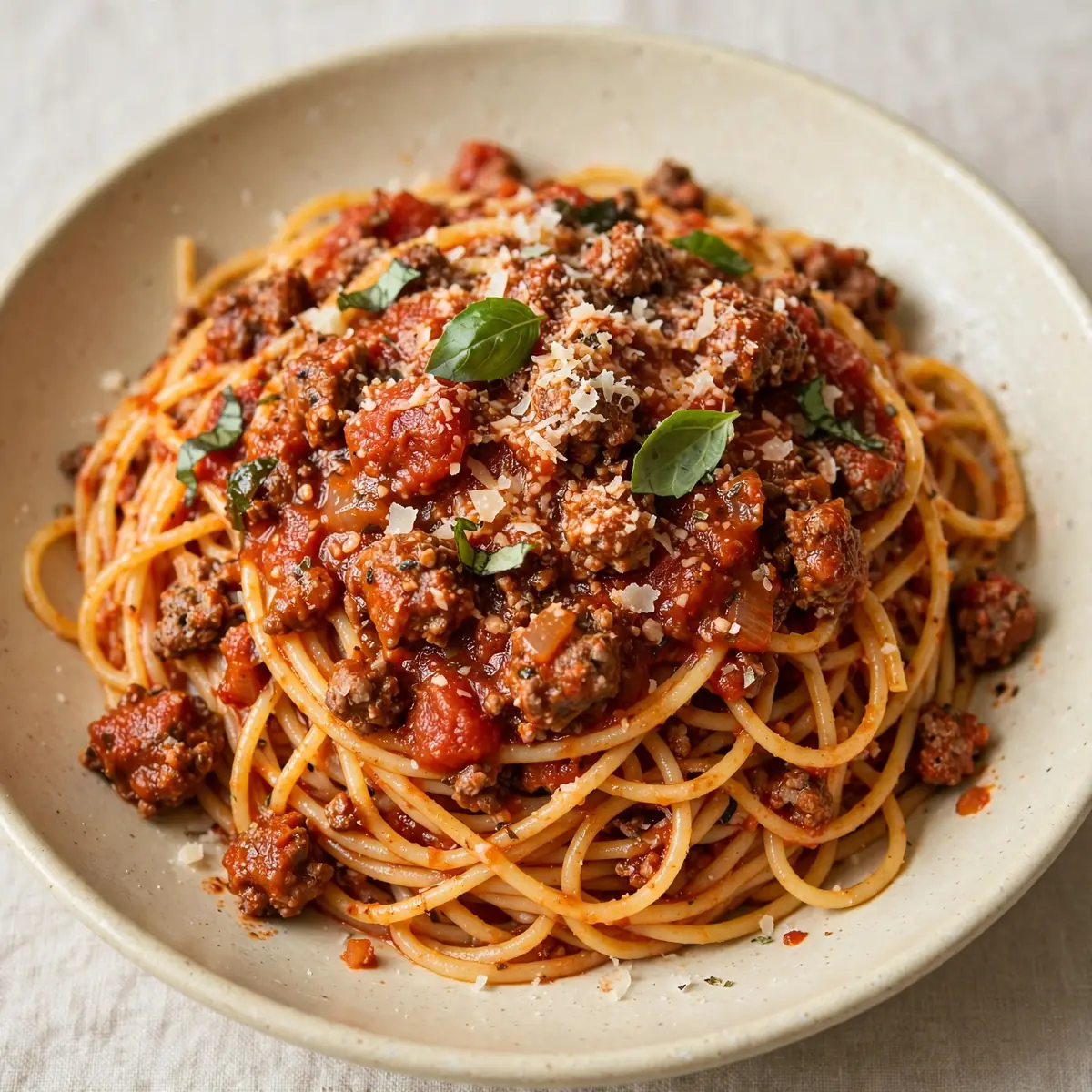
- Bring it together: Reserve a cup of pasta cooking water before draining the spaghetti. Return the drained spaghetti to the pot and ladle over a generous amount of the meat sauce. Toss everything together with tongs, adding a splash of the reserved pasta water if the sauce feels too thick. The water helps the sauce cling to every strand of pasta. Serve immediately with a shower of Parmesan.
Notes
For best results, use a heavy-bottomed pot and allow the sauce to simmer low and slow for a full hour to develop depth of flavor. Reserve pasta water to adjust sauce consistency.