Homemade Queso Dip

There are few pleasures quite so simple as a saucepan of melted cheese, bubbling away on the hob, its rich aroma filling the kitchen on a grey Sunday afternoon. This homemade queso dip is my weekend project, a slow, deliberate ritual that rewards patience with a velvety, deeply savoury sauce that no shop-bought version can touch. It’s not about speed; it’s about the process, the stirring, the watching, and the quiet joy of creating something utterly comforting from scratch.
Recipe Overview
- Prep Time: 10 minutes
- Cook Time: 15 minutes
- Total Time: 25 minutes
- Servings: 6-8 as a dip
- Difficulty: Easy
Why You’ll Love This Homemade Queso Dip
- Authentic, real ingredients: No processed cheese blocks or mystery powders – just good cheddar, a little cream, and fresh aromatics.
- Perfectly smooth every time: The texture is silky and luscious, never grainy or greasy, thanks to a simple technique.
- A cosy weekend ritual: This isn’t a rushed weeknight affair; it’s a slow, mindful cook that fills your home with the most inviting scent.
- Endlessly adaptable: You can dial up the heat, add roasted veg, or stir in leftover shredded chicken for a heartier version, or even explore other fresh, customizable meals like Shrimp Tacos With Avocado Cream.
- Far superior to store-bought: Once you’ve tasted this, you’ll never go back. I make this at least once a week – it’s become a family favourite.
Ingredients You’ll Need
- 2 tbsp unsalted butter (30g)
- 1 small white onion, finely diced (about 100g)
- 2 cloves garlic, minced
- 1 jalapeño, seeds removed and finely diced (optional, for heat)
- 2 tbsp plain flour (20g)
- 300ml whole milk
- 200ml double cream
- 400g mature cheddar cheese, freshly grated (do not use pre-grated cheese, as it contains anti-caking agents that affect melting)
- 100g Monterey Jack or mild cheddar, freshly grated
- 1 tsp ground cumin
- ½ tsp smoked paprika
- ½ tsp salt, or to taste
- ¼ tsp black pepper
- 1 medium tomato, seeds removed and finely diced (for garnish)
- Fresh coriander, chopped (for garnish)
Tip: Grate your cheese from a block – I cannot stress this enough. The pre-shredded bags are coated in starch to stop clumping, which prevents the cheese from melting into a smooth sauce. Take the extra five minutes; your queso will thank you.
How to Make Homemade Queso Dip
- Start the base: Melt the butter in a heavy-bottomed saucepan over a medium heat. When it starts to foam and you hear that gentle, quiet sizzle, add the diced onion. Stir, and listen for the soft hiss as the onion hits the fat. Cook for 4-5 minutes, until the onion turns translucent and you can smell its sweet, mellow fragrance. Add the garlic and jalapeño (if using), and cook for another minute, until the garlic is fragrant but not coloured.
- Make a roux: Sprinkle the flour over the cooked vegetables. Stir constantly with a wooden spoon for 1-2 minutes. You’ll see the mixture clump into a pale, sandy paste. Let it cook until it smells slightly nutty, like toasted biscuits – this removes the raw flour taste.
- Slowly add the liquid: Pour in the milk in a thin, steady stream, whisking continuously. The mixture will seize up and look alarmingly thick at first, but keep whisking. As you add more milk, it will loosen. Then add the double cream in the same way. Bring the sauce to a gentle simmer – you’ll see tiny bubbles breaking the surface, like a quiet spring. Cook for 2-3 minutes, stirring, until the sauce is smooth and thick enough to coat the back of your spoon. It should look glossy and pale.
- Lower the heat and add the cheese: Reduce the heat to the lowest setting. This is critical. Add the grated cheddar and Monterey Jack a handful at a time, stirring gently after each addition. Watch as the cheese ribbons melt into the warm sauce, turning it a deep, golden yellow. The smell at this point is intoxicating – rich, creamy, and savoury. Stir until the sauce is completely homogenous and smooth, with no visible streaks of cheese.
- Season and finish: Stir in the ground cumin, smoked paprika, salt, and pepper. Taste, and adjust the seasoning. You want a gentle warmth from the spices, not an overpowering flavour. The texture should be thick but pourable, like warm honey.
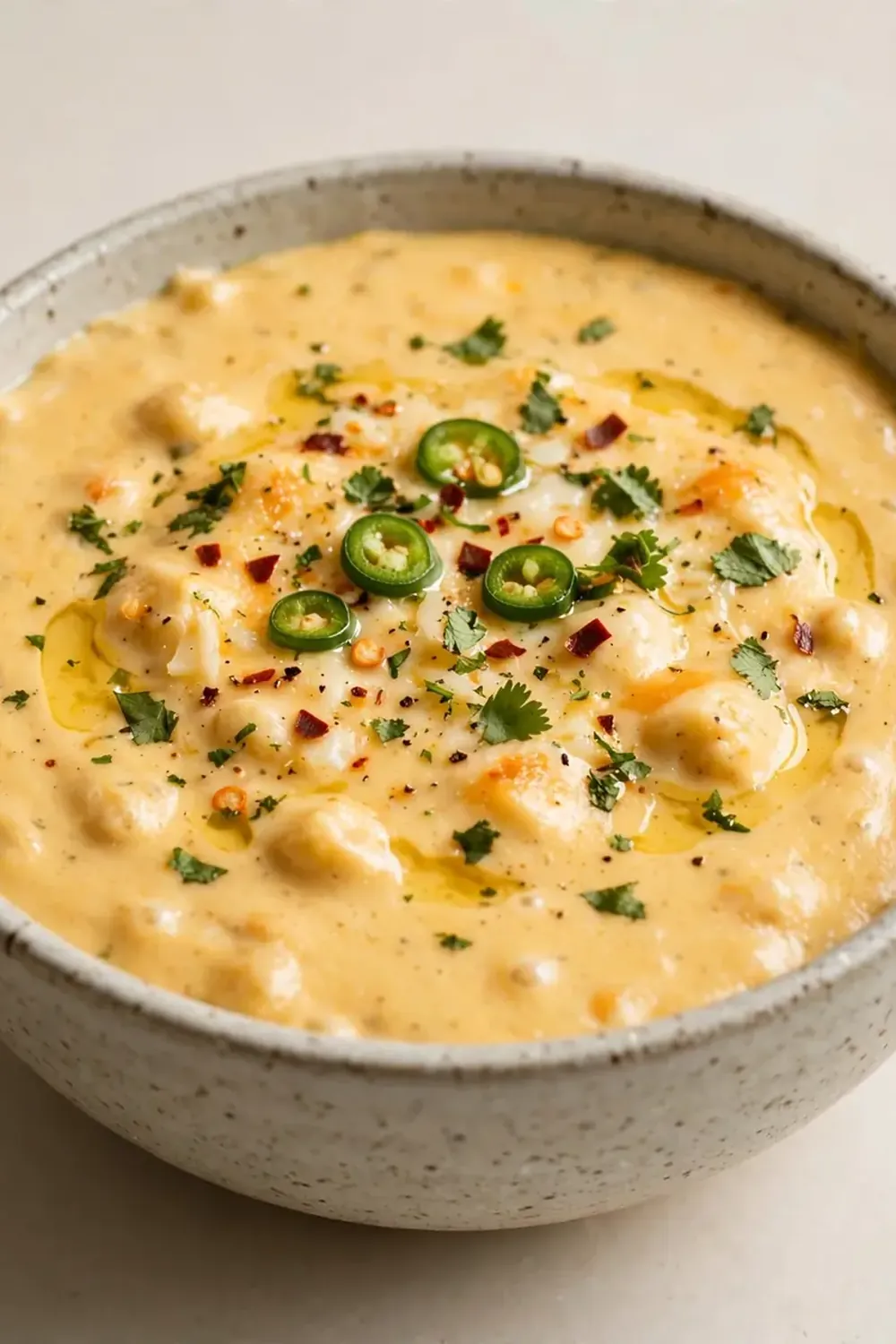
- Serve immediately: Pour the queso into a warmed serving bowl. Top with the diced tomato and a scattering of fresh coriander. The dip will be hot and silky, with a slight sheen on its surface. Serve at once, while it’s still gloriously molten.
Tips From My Kitchen
- Low and slow is the golden rule: Cheese is a delicate emulsion of fat and water. High heat will break the emulsion, leaving you with a greasy, grainy mess. Always melt cheese over low heat, and remove the pan from the burner if you need to. Patience is your best ingredient here.
- Use a mix of cheeses for depth: Mature cheddar gives that sharp, tangy kick, while Monterey Jack (or a mild cheddar) provides superior meltability and a creamier texture. I stumbled upon this combination by accident, and it’s been a hit ever since. A single cheese can be one-dimensional; a blend creates layers of flavour.
- Don’t skip the roux: The butter and flour paste (roux) is the backbone of a stable, non-split queso. It absorbs excess moisture from the milk and cream, preventing the sauce from becoming watery and ensuring the cheese melts into a cohesive, velvety sauce rather than pooling in fat.
- Warm your serving bowl: Queso cools down quickly, and nothing is sadder than a bowl of congealed cheese. Pour a little hot water into your serving bowl, let it sit for a minute, then dry it thoroughly before adding the dip. This keeps it molten for longer.
- Rescue a split sauce: If your queso does start to look grainy or oily, don’t panic. Remove it from the heat immediately. Add 1-2 tablespoons of cold milk and whisk vigorously. The cold liquid can sometimes pull the emulsion back together. A teaspoon of cornflour mixed with a tablespoon of cold milk can also work as a stabiliser.
Common Mistakes to Avoid
- Overcrowding the pan: Adding all the cheese at once is a surefire way to end up with a clumpy, uneven sauce. The cheese needs room to melt gradually into the warm liquid. Add it in small handfuls, stirring until each addition is fully incorporated before adding the next. This ensures a perfectly smooth, homogenous result.
- Wrong temperature: A rolling boil is the enemy of cheese. If your sauce is bubbling aggressively, the fat will separate from the solids, leaving a greasy, curdled dip. Keep the heat low, and look for a gentle shimmer on the surface, not a full boil. If you see large, rapid bubbles, you’ve gone too far.
- Skipping the rest time: While queso is best served immediately, it does benefit from a brief 2-minute rest off the heat before serving. This allows the residual heat to finish melting any tiny, stubborn shreds of cheese and lets the flavours meld together. It also allows the dip to thicken slightly to the perfect dipping consistency.
What to Serve With Homemade Queso Dip
- A big bowl of sturdy, salted tortilla chips – the kind that can hold their own against a generous scoop.
- Warm, soft flour tortillas, cut into wedges, for a more substantial bite.
- Crunchy vegetable sticks like carrot, celery, and bell pepper for a fresh, cool contrast.
- Drizzled over nachos loaded with seasoned beef, beans, and jalapeños for a proper feast.
- Alongside a plate of classic tacos or burritos for a complete meal.
Still hungry for ideas? You might also love Chilis Skillet Queso Dip Copycat from our sister kitchens.
Frequently Asked Questions
Homemade Queso Dip
Ingredients
Method
-
Start the base: Melt the butter in a heavy-bottomed saucepan over a medium heat. When it starts to foam and you hear that gentle, quiet sizzle, add the diced onion. Stir, and listen for the soft hiss as the onion hits the fat. Cook for 4-5 minutes, until the onion turns translucent and you can smell its sweet, mellow fragrance. Add the garlic and jalapeño (if using), and cook for another minute, until the garlic is fragrant but not coloured.
-
Make a roux: Sprinkle the flour over the cooked vegetables. Stir constantly with a wooden spoon for 1-2 minutes. You’ll see the mixture clump into a pale, sandy paste. Let it cook until it smells slightly nutty, like toasted biscuits – this removes the raw flour taste.
-
Slowly add the liquid: Pour in the milk in a thin, steady stream, whisking continuously. The mixture will seize up and look alarmingly thick at first, but keep whisking. As you add more milk, it will loosen. Then add the double cream in the same way. Bring the sauce to a gentle simmer – you’ll see tiny bubbles breaking the surface, like a quiet spring. Cook for 2-3 minutes, stirring, until the sauce is smooth and thick enough to coat the back of your spoon. It should look glossy and pale.
-
Lower the heat and add the cheese: Reduce the heat to the lowest setting. This is critical. Add the grated cheddar and Monterey Jack a handful at a time, stirring gently after each addition. Watch as the cheese ribbons melt into the warm sauce, turning it a deep, golden yellow. The smell at this point is intoxicating – rich, creamy, and savoury. Stir until the sauce is completely homogenous and smooth, with no visible streaks of cheese.
-
Season and finish: Stir in the ground cumin, smoked paprika, salt, and pepper. Taste, and adjust the seasoning. You want a gentle warmth from the spices, not an overpowering flavour. The texture should be thick but pourable, like warm honey.
-
Serve immediately: Pour the queso into a warmed serving bowl. Top with the diced tomato and a scattering of fresh coriander. The dip will be hot and silky, with a slight sheen on its surface. Serve at once, while it’s still gloriously molten.
Notes
This homemade queso dip is more than just a snack; it’s a moment to slow down, to breathe in the warm, cheesy air, and to share something simple and wonderful with the people you love. I hope you find as much joy in making it as I do. Have you tried it with a different twist? I’d love to hear your favourite additions in the comments below. For more weekend cooking inspiration, you might like to browse our dinner recipes or see what Med has been creating in the kitchen.