Classic Funnel Cake
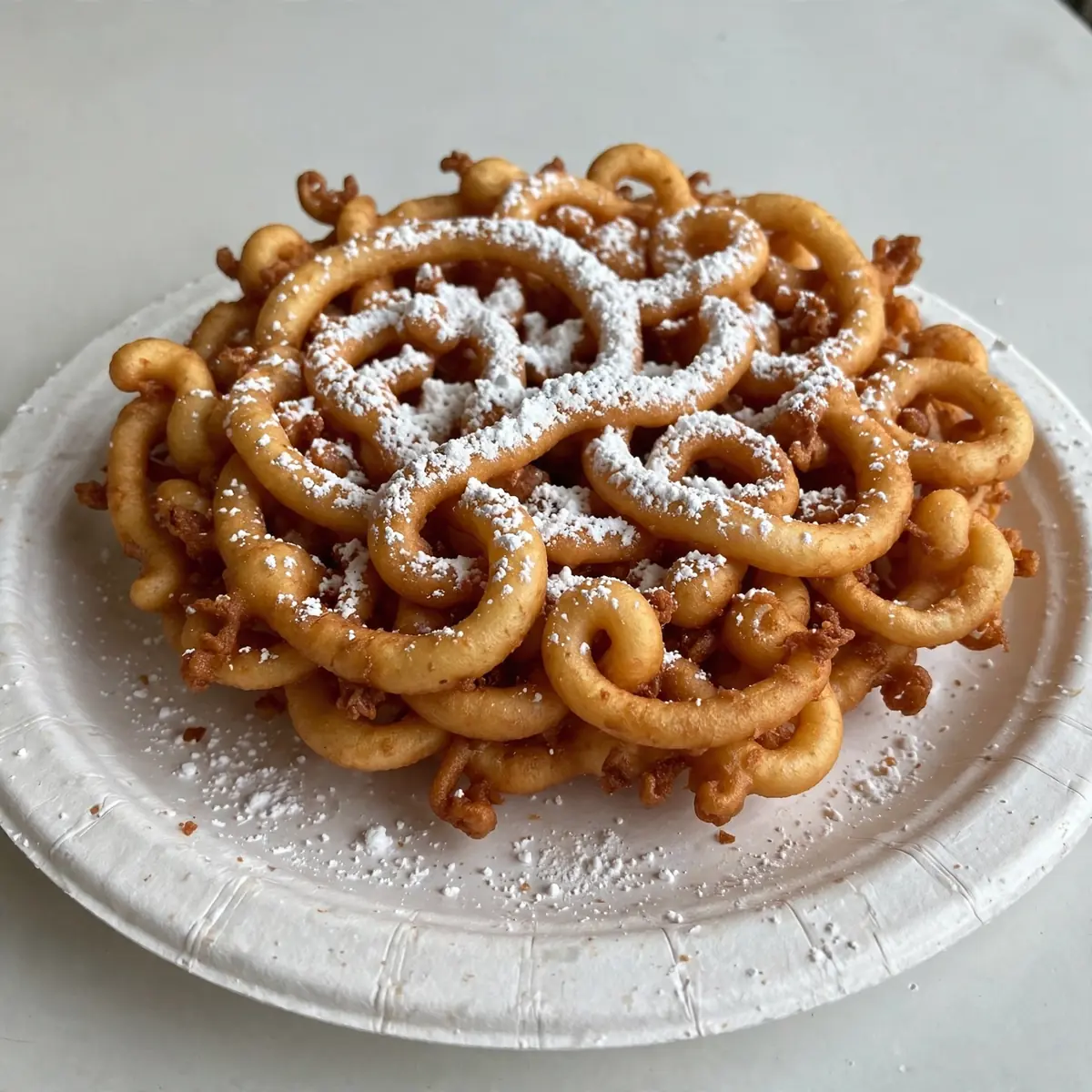
There are few kitchen projects more rewarding than a lazy weekend spent recreating the nostalgic magic of a fairground favourite. For me, that project is Classic Funnel Cake — a golden, lacy tangle of crisp batter dusted with a snowdrift of icing sugar. This recipe is your ticket to bringing that carnival aroma right into your own kitchen, without the queues or the crumpled tickets.
Recipe Overview
- Prep Time: 15 minutes
- Cook Time: 20 minutes (for 4 cakes)
- Total Time: 35 minutes
- Servings: 4 generous cakes
- Difficulty: Easy (with a little patience)
Why You’ll Love This Classic Funnel Cake
- That unmistakable aroma: The scent of hot oil and vanilla filling your home is half the joy of this recipe.
- Deeply satisfying crunch: Each bite gives way to a shatteringly crisp exterior and a soft, airy interior.
- A true sensory project: From whisking the batter to watching it sizzle, every step is a mindful, calming ritual.
- No deep fryer needed: A simple heavy-bottomed pan and a spouted cup or piping bag are all you require.
- Endlessly customisable: It’s a blank canvas for whatever toppings you fancy — from fresh fruit to a drizzle of chocolate.
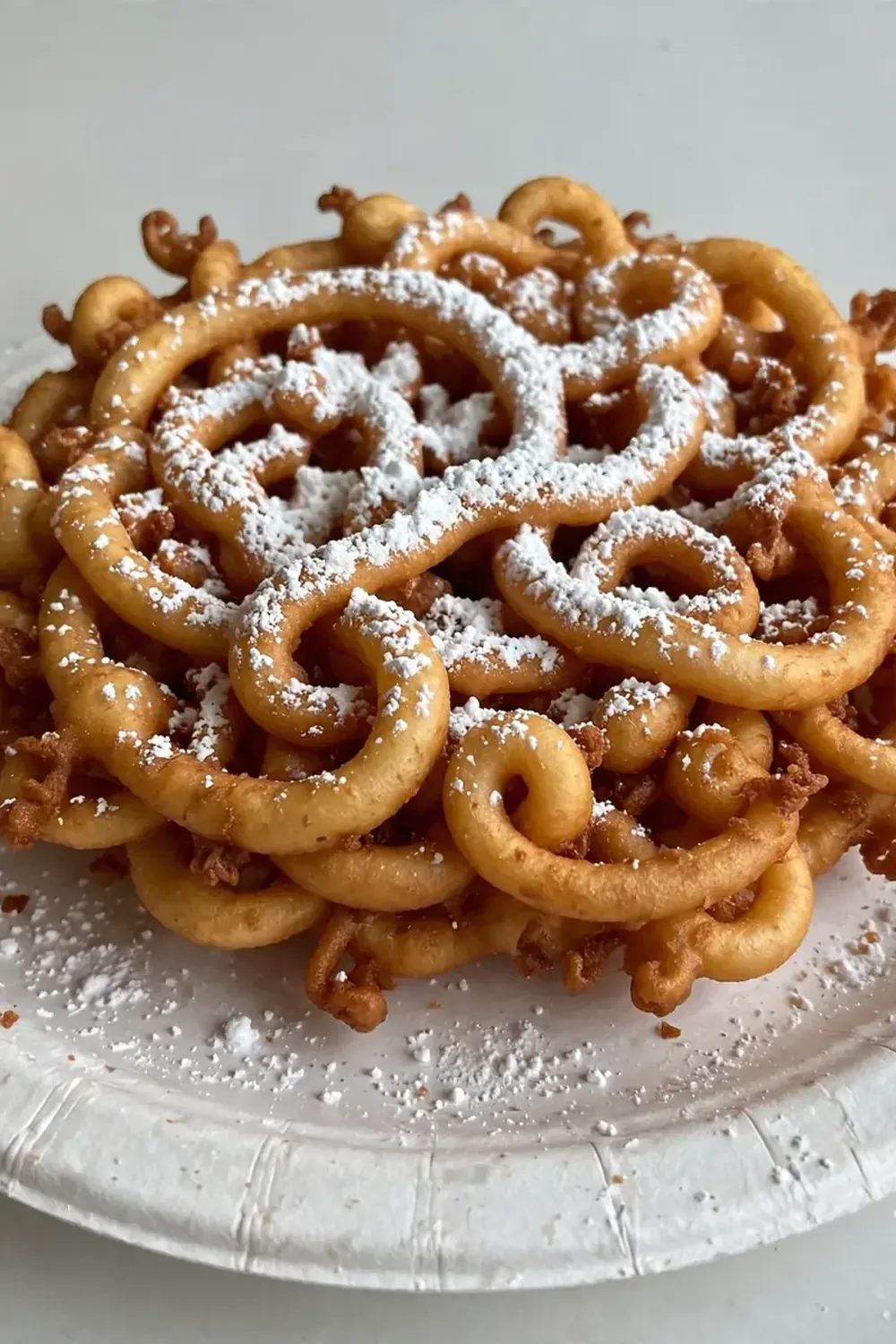
Ingredients You’ll Need
- 250g plain flour (all-purpose flour)
- 2 large eggs, at room temperature
- 240ml whole milk
- 50g caster sugar
- 1 teaspoon vanilla extract
- 2 teaspoons baking powder
- ½ teaspoon fine sea salt
- 1 litre vegetable or sunflower oil, for frying
- Icing sugar, for a generous dusting
- Fresh strawberries or raspberries, to serve (optional)
- Whipped cream, to serve (optional)
Tip: The key to a light, crisp funnel cake is a batter that flows easily from a spout. If your batter seems too thick after mixing, add an extra tablespoon of milk until it ribbons off the whisk.
How to Make Classic Funnel Cake
- Whisk the dry ingredients: In a large mixing bowl, combine the flour, caster sugar, baking powder and salt. Whisk them together thoroughly — you want the baking powder evenly distributed so every strand of cake puffs up uniformly.
- Build the batter: In a separate jug, whisk the eggs, milk and vanilla extract until they’re completely combined and slightly frothy on top. Pour this wet mixture into the dry ingredients, stirring gently with a wooden spoon until just combined. A few small lumps are fine — overmixing will make the cake tough. The finished batter should have the consistency of thick double cream, smooth and glossy.
- Heat the oil with care: Pour the oil into a deep, heavy-based saucepan or a wide, high-sided frying pan. The oil should be about 5cm deep. Heat it over a medium flame until a small drop of batter sizzles immediately on contact. If you have a thermometer, aim for 175°C. The oil should shimmer gently, not smoke — that’s your visual cue it’s ready.
- Prepare your pouring vessel: Pour the batter into a clean squeezy bottle with a narrow nozzle, a piping bag fitted with a 1cm round tip, or a small jug with a spout. A funnel with a 1cm opening is the traditional choice, hence the name, but any tool that gives you a steady, controlled stream will work.
- Fry in a spiral pattern: Holding your pouring vessel about 15cm above the hot oil, begin drizzling the batter in a continuous, circular motion, starting from the centre and working outward. You want a freeform, lacy nest — about 18cm in diameter. The batter will sink slightly, then immediately begin to puff and turn golden. Let it cook for 1–2 minutes, until the underside is a deep, even gold. You’ll hear a satisfying, steady sizzle — that’s the sound of perfection.
- Flip with confidence: Using two forks or a slotted spatula, carefully flip the cake over. It should release easily from the oil. Cook for another 45 seconds to 1 minute, until the second side is equally golden and crisp. The cake will feel firm and slightly springy to the touch.
- Drain and dust: Lift the funnel cake from the oil, letting any excess drip back into the pan. Transfer it to a plate lined with kitchen paper to drain for just 15 seconds. Immediately transfer to a serving plate and, while it’s still warm, dust it heavily with icing sugar through a fine sieve. The heat will make the sugar melt slightly, creating a delicate, sweet glaze.
Tips From My Kitchen
- Get the oil temperature right: If the oil is too cool, the batter will absorb fat and become greasy rather than crisp. Too hot, and the outside will burn before the centre is cooked. I use a kitchen thermometer for peace of mind, but a cube of bread dropped in the oil will work: it should turn golden in about 60 seconds.
- Don’t overcrowd the pan: Fry one funnel cake at a time. Adding more than one drops the oil temperature too quickly, resulting in soggy, pale cakes. Patience is the secret to that perfect crunch.
- Keep the batter moving: If the batter sits for more than 10 minutes, the baking powder will start reacting and the mixture will thicken. Give it a gentle stir before pouring your next cake to keep the consistency right.
- Use a spouted cup for control: After testing this recipe five times, I finally got it just right with a simple 250ml measuring jug with a sharp pouring spout. It gives you excellent control over the flow of batter, preventing thick, doughy lumps.
- Work in a ventilated space: Frying creates a fair amount of steam and a gentle oil mist. I like to open a window and switch on the extractor fan before I start. It keeps the kitchen fresh and the aromas from lingering too long on soft furnishings.
Delicious Variations to Try
- Spiced Chai Version: Add 1 teaspoon of ground cinnamon, ½ teaspoon of ground cardamom and a pinch of ground ginger to the dry ingredients. After frying, dust with a mix of icing sugar and a little extra cinnamon. I stumbled upon this combination by accident, and it’s been a hit ever since.
- Citrus Zest Version: Whisk the finely grated zest of one unwaxed lemon and one orange into the milk before adding it to the flour. The bright, fragrant notes cut through the richness of the fried batter beautifully.
- Chocolate Drizzle Version: Melt 100g of dark chocolate (at least 70% cocoa solids) with a tablespoon of coconut oil, then drizzle it over the finished cake before the icing sugar. The slight bitterness of the chocolate balances the sweetness perfectly.
What to Serve With Classic Funnel Cake
- A generous dollop of softly whipped cream, barely sweetened
- A handful of fresh, sharp berries — raspberries or sliced strawberries work wonderfully
- A scoop of good-quality vanilla ice cream for an extra-indulgent treat
- A side of warm Homemade Queso Dip for a sweet-and-savoury twist that surprises everyone
- A tall glass of cold milk or a strong coffee to cut through the richness
Frequently Asked Questions
Classic Funnel Cake
Ingredients
Method
- Whisk the dry ingredients: In a large mixing bowl, combine the flour, caster sugar, baking powder and salt. Whisk them together thoroughly — you want the baking powder evenly distributed so every strand of cake puffs up uniformly.
- Build the batter: In a separate jug, whisk the eggs, milk and vanilla extract until they’re completely combined and slightly frothy on top. Pour this wet mixture into the dry ingredients, stirring gently with a wooden spoon until just combined. A few small lumps are fine — overmixing will make the cake tough. The finished batter should have the consistency of thick double cream, smooth and glossy.
- Heat the oil with care: Pour the oil into a deep, heavy-based saucepan or a wide, high-sided frying pan. The oil should be about 5cm deep. Heat it over a medium flame until a small drop of batter sizzles immediately on contact. If you have a thermometer, aim for 175°C. The oil should shimmer gently, not smoke — that’s your visual cue it’s ready.
- Prepare your pouring vessel: Pour the batter into a clean squeezy bottle with a narrow nozzle, a piping bag fitted with a 1cm round tip, or a small jug with a spout. A funnel with a 1cm opening is the traditional choice, hence the name, but any tool that gives you a steady, controlled stream will work.
- Fry in a spiral pattern: Holding your pouring vessel about 15cm above the hot oil, begin drizzling the batter in a continuous, circular motion, starting from the centre and working outward. You want a freeform, lacy nest — about 18cm in diameter. The batter will sink slightly, then immediately begin to puff and turn golden. Let it cook for 1–2 minutes, until the underside is a deep, even gold. You’ll hear a satisfying, steady sizzle — that’s the sound of perfection.
- Flip with confidence: Using two forks or a slotted spatula, carefully flip the cake over. It should release easily from the oil. Cook for another 45 seconds to 1 minute, until the second side is equally golden and crisp. The cake will feel firm and slightly springy to the touch.
- Drain and dust: Lift the funnel cake from the oil, letting any excess drip back into the pan. Transfer it to a plate lined with kitchen paper to drain for just 15 seconds. Immediately transfer to a serving plate and, while it’s still warm, dust it heavily with icing sugar through a fine sieve. The heat will make the sugar melt slightly, creating a delicate, sweet glaze.
Notes
I’d love to hear how your weekend funnel cake project turns out. Drop a comment below and let me know which variation you tried, or share your own topping ideas. There’s nothing quite like the quiet satisfaction of pulling a perfect, golden tangle of batter from the oil, knowing you made it all from scratch.